
How to Set Up a Mobile Mechanic Van From 232 Real Jobs
Author Source EEAT Authors · Anthony's Author Page
You are standing in an empty cargo van with a credit card and a stack of drawer catalogs. Stop and read the sticker on the driver door first. A good mobile mechanic van setup starts with the weight it can carry. Then it carries tools for the jobs that really come in, and very few parts. Then it hauls its own mess away and stays on the right side of the truck rules.
- The label on the driver door jamb gives the van's top legal weight. Payload is that number minus what the van weighs empty.
- Of 232 paid Supercanic mobile jobs from September 1 to November 17, 2026, 168 had no part on the invoice. That is 72%.
- A business may haul up to 55 gallons of its own used oil at a time to a registered collection center.
- Rated at 10,001 pounds or more and crossing state lines for work? Federal motor carrier rules apply.
- In California, a work truck rated over 10,000 pounds needs a motor carrier permit, even when it only hauls your own tools.
Read the Door Label Before You Buy a Single Drawer
Every van has a certification label. Federal rules put it on the driver side door edge or door post. It lists the Gross Vehicle Weight Rating, or GVWR. It also lists a Gross Axle Weight Rating for each axle.
GVWR is the most the van may weigh, loaded. That means you, a helper, fuel, shelves, drawers, tools and fluids. All of it counts.
Shelving and steel drawers are heavy. So are a floor jack, jack stands and a box of sockets. New owners bolt in a full shop, then wonder why the brakes fade and the tires wear fast.
Do the math before you buy.
- Write down the GVWR from the door label.
- Weigh the empty van at a public truck scale, with a full tank.
- Subtract. The answer is your payload.
- Subtract yourself and anyone who rides along.
- What is left is the budget for shelves, tools and stock.
A worked example, not a real van. Say the label reads 9,500 pounds and the empty van weighs 5,700. That leaves 3,800 pounds. Two people at 400 pounds together leave 3,400 for the build. Plan to use well under that. A van at its limit every day wears out sooner.
Check the axles too. A heavy toolbox and a compressor at the back doors can overload the rear axle while the van is under its GVWR. Put the heaviest things low and close to the rear axle, not at the back doors. Weigh each axle at the scale once the build is done.
Stock Tools, Not Parts
Most van builds online show walls of parts bins. The jobs say something else.
Supercanic runs mobile repair out of San Jacinto, California. Its Shop Desk records from September 1 through November 17, 2026 hold 232 paid jobs with full invoice lines. Only 64 of them billed a part. The other 168 were labor only. Think diagnostics and inspections, plus repairs billed as labor.
The parts that did show up were spread thin. No single kind of part was on more than 11 jobs.
What the 64 Jobs With Parts Were Buying
Jobs that billed each kind of part. Supercanic, Sep 1 to Nov 17, 2026.
- Brake parts11 jobs
- Oil or filters9 jobs
- Alternator or starter9 jobs
- Spark plugs or coils6 jobs
- Battery3 jobs
- Fuel pump2 jobs
- Everything else28 jobs
That spread is the case against a van full of inventory. A brake pad box fits one car. Ten boxes of pads still miss the car on tomorrow's list.
Carry the fast movers that fit almost anything. Shop rags, gloves, brake cleaner, fuses, bulbs, zip ties, hose clamps, a few quarts of common oil. Buy the rest for the job, from a parts store commercial account, after the diagnosis.
Parts are where customers lose patience. Of 288 public forum posts about mobile mechanics, 72 were about parts. Who buys them, the wrong one showing up, or waiting a day for one. So build a parts plan, not a parts wall.
- Open a commercial account at two parts stores near your area. Ask about delivery to a job address.
- Quote parts by VIN before you drive out. The wrong part costs a second trip.
- Tell the customer up front whether you supply parts. Say if their own parts change your warranty.
Build the Van Around the First Hour of Every Job
The first hour on most jobs is the same. Find out what is wrong, or check what the buyer is about to pay for.
Of the same 232 Supercanic jobs, 55 had diagnostic or no start words in the title or complaint. Another 62 were inspections. The middle ticket was $225. So the tools that open the job earn the most.
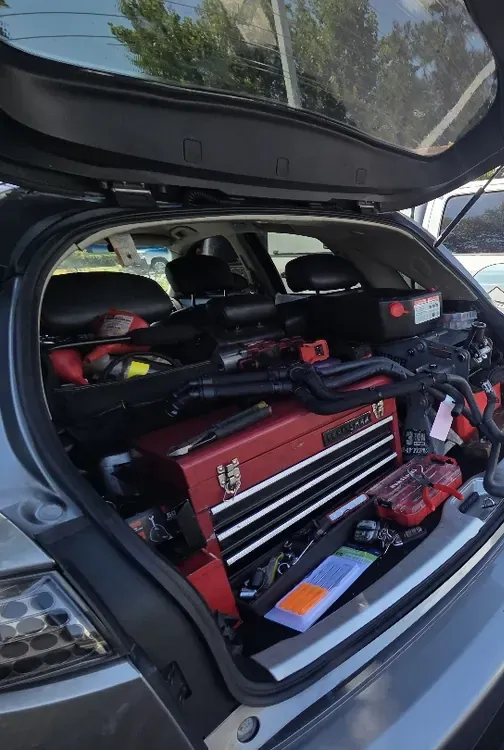
- A scan tool with live data. It works on more cars than any wrench you own. Keep it charged, with a backup cable.
- Battery and charging gear. A tester, a jump pack and a charger. A dead battery can be the whole job, or it can hide the real one.
- An inspection kit. A strong light, a mirror, a paint depth gauge, a tire tread gauge.
- A floor jack, stands and wheel chocks. Add a plywood square for soft ground and hot asphalt.
- Light for the dark. A headlamp and an area light. Winter jobs run past sunset.
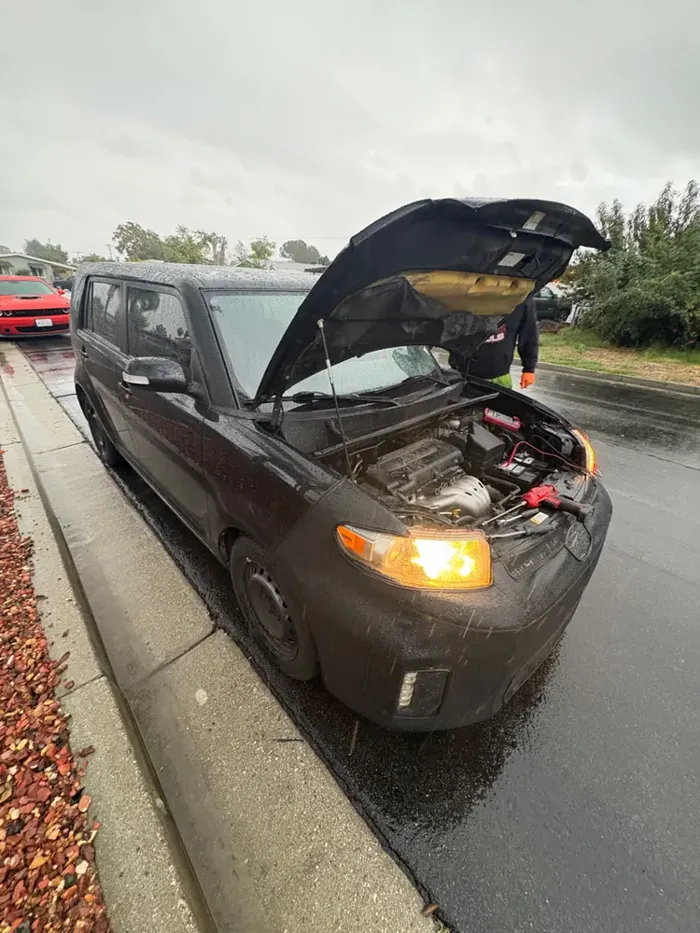
Power is the next question. Cordless tools cover most driveway work now. A jump pack covers the car. An inverter or generator only earns its weight if you run a compressor, a heat gun or a charger on site all day. Weigh it against your payload budget first.
Put the opening tools by the side door. You grab them on every stop. The heavy jack rides low and forward, near the axle.
Carry the Mess Out With You
A shop has a drain and a waste hauler. A van has a customer's driveway. Leave it clean, or lose the review.
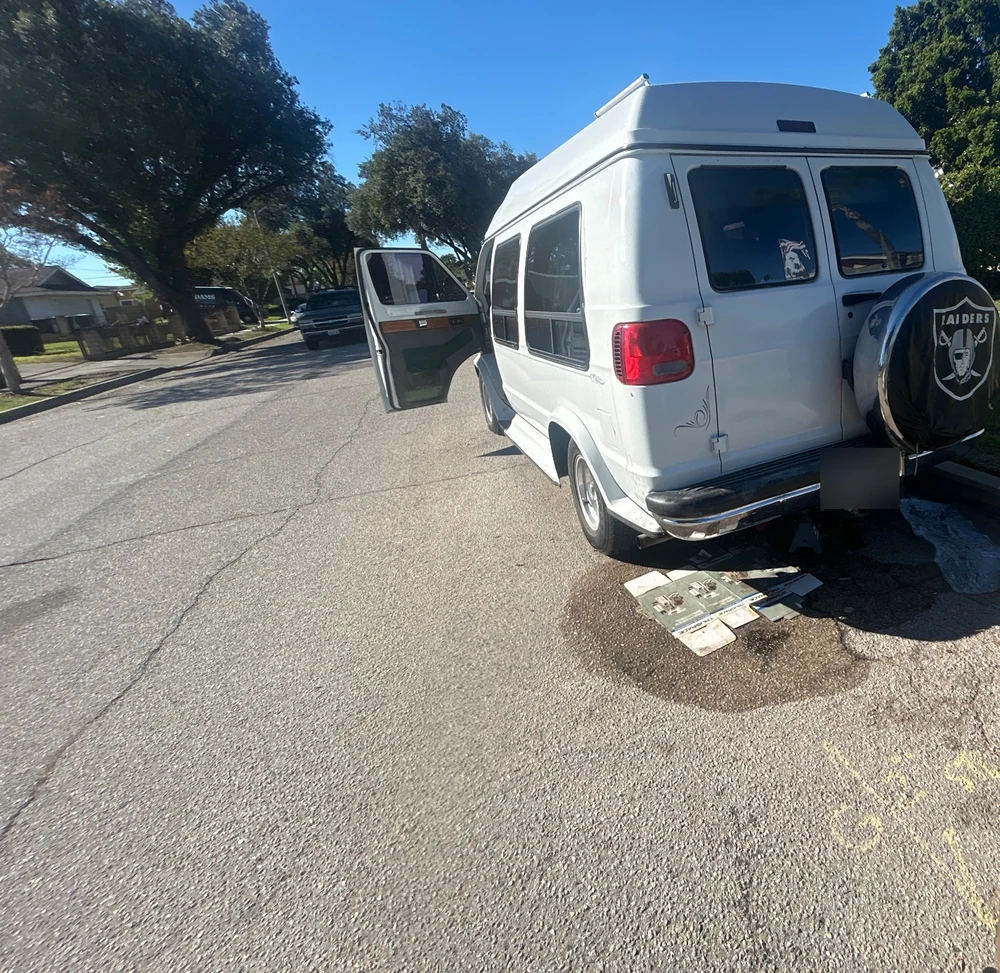
Used oil has a federal rule for businesses that make it. A generator may haul its own used oil without a federal ID number. It must ride in a vehicle the business or an employee owns. It cannot be more than 55 gallons at once. It must go to a collection center a state, county or city recognizes. Your state may add more on top, so ask your local waste office.
So the van needs a few things a garage never thinks about.
- Sealed drain containers sized for the oil you change in a day.
- A spill kit with absorbent and a mat or tarp under the work.
- A bin for used filters, kept apart from the trash.
- A regular stop at a collection center on your route.
A/C work brings its own rule. Anyone paid to service a car A/C system must be trained and certified under Section 609 of the Clean Air Act. If A/C is on your menu, the van carries the gear and you carry the card.
Know When Your Van Becomes a Commercial Truck
Weight changes more than how the van drives. It can change which rules you live under.
| Where the line sits | What changes | Who says so |
|---|---|---|
| GVWR of 10,001 pounds or more, used across state lines for work | It is a commercial motor vehicle. The business registers with FMCSA for a USDOT number. | Federal rules, 49 CFR 390.5 and 390.201 |
| California truck with two or more axles rated over 10,000 pounds | It needs a Motor Carrier Permit, even hauling only your own property. That brings a CA number and a USDOT number. | California Highway Patrol and Caltrans |
| Any California mobile repair dealer | The van's plate number becomes part of the registered business name on invoices and ads. | Bureau of Automotive Repair |
| Truck or van rated over 6,000 pounds | It is not a passenger automobile under the federal tax code. The yearly depreciation caps for cars do not apply the same way. | 26 U.S.C. 280F |
Most mobile mechanics who stay in a cargo van and in one state never touch the first two rows. A service body truck on a heavy chassis often does. Check the door label before you sign for one.
California also moved on mobile shops in October 2025. A mobile applicant must give a physical address where records are kept. Every final invoice must say where the repair was done. A van swap is a paperwork job too, because the plate sits in your registered name.
The tax line is worth a call to your tax preparer before you buy. The weight on the label can change how fast the van gets written off.
Leave Room to Say No
No van turns a driveway into a lift. Of those 288 forum posts about mobile mechanics, 49 were about a job too big for the driveway.
So skip building for engine pulls and transmission swaps. Those tools are heavy and rarely used. They eat payload that should carry the scan tool, the jack and clean drain pans.
Line up a shop with a lift that will take your overflow. Send the big jobs there. The customer still gets an answer from you, and your van stays light enough to make five stops a day.
How the job numbers were counted. The figures come from Supercanic's own job records in Shop Desk, September 1 through November 17, 2026, the months with full invoice lines. Each paid job counts once, at its first invoice. Voided and $0 invoices are left out. Part types were sorted by the words in each part line. The forum figures come from 288 public posts about mobile mechanics, sorted by topic.
Straight Answers
- What is the best van for a mobile mechanic?
- Pick by payload, not by brand. Read the GVWR on the door label, weigh the empty van, and make sure the gap covers you, your tools and your shelves with room to spare. Stand up room helps, but a lighter build in a smaller van beats an overloaded big one.
- Does a mobile mechanic van need a DOT number?
- A van or truck rated at 10,001 pounds or more, used across state lines for work, is a commercial motor vehicle under federal rules, and the business registers for a USDOT number. In California, a truck with two or more axles rated over 10,000 pounds also needs a Motor Carrier Permit, even inside the state.
- How much used oil can a mobile mechanic haul?
- Federal rules let a business haul up to 55 gallons of its own used oil at a time, in a vehicle the business or an employee owns, to a recognized collection center. States can add rules, so check yours.
- Should a mobile mechanic carry parts in the van?
- Carry small fast movers and buy the rest per job. In Supercanic's records, 168 of 232 paid jobs billed no part at all, and no single part type showed up on more than 11 jobs.
- Can I write off my work van?
- Usually, as a business vehicle. A truck or van rated over 6,000 pounds is outside the tax code's passenger automobile definition, which changes the depreciation limits. Ask a tax preparer before you buy, since the rules shift by vehicle design and year.
Notes and Links
| Fact | Source |
|---|---|
| Door label location, GVWR and axle ratings | 49 CFR 567.4, vehicle certification labels |
| Commercial motor vehicle at 10,001 pounds in interstate commerce | 49 CFR 390.5, definitions |
| Who registers with FMCSA | 49 CFR 390.201, registration |
| California Motor Carrier Permit, trucks over 10,000 pounds, private carriers | California Highway Patrol, Motor Carrier of Property Permit FAQ (Rev. 8-23) |
| CA number and USDOT number for in-state carriers | Caltrans, CA Number |
| 55 gallon used oil rule for businesses | 40 CFR 279.24, used oil generators |
| A/C service certification | EPA, Section 609 technician certification programs |
| Plate number in the registered business name | Bureau of Automotive Repair, ARD application BAR-101 |
| California mobile rules from October 1, 2025 | Bureau of Automotive Repair, mobile repair regulations (October 23, 2025) |
| 6,000 pound passenger automobile line | 26 U.S.C. 280F |
| 232 paid jobs, parts and job mix | Supercanic job records in Shop Desk, September to November 2026 |
| 288 forum posts about mobile mechanics | Public forum posts, sorted by topic, 2026 |
Next Read for You
- How to start a mobile mechanic business, paperwork first
- Shop Desk for mobile mechanics, quotes, parts lines and invoices in one place.
- Getting found on Google and in the directory
Supercanic has run mobile repair in Hemet and San Jacinto since 2024. Everything it built for mobile mechanics is on the mobilemechanics.app home page.